
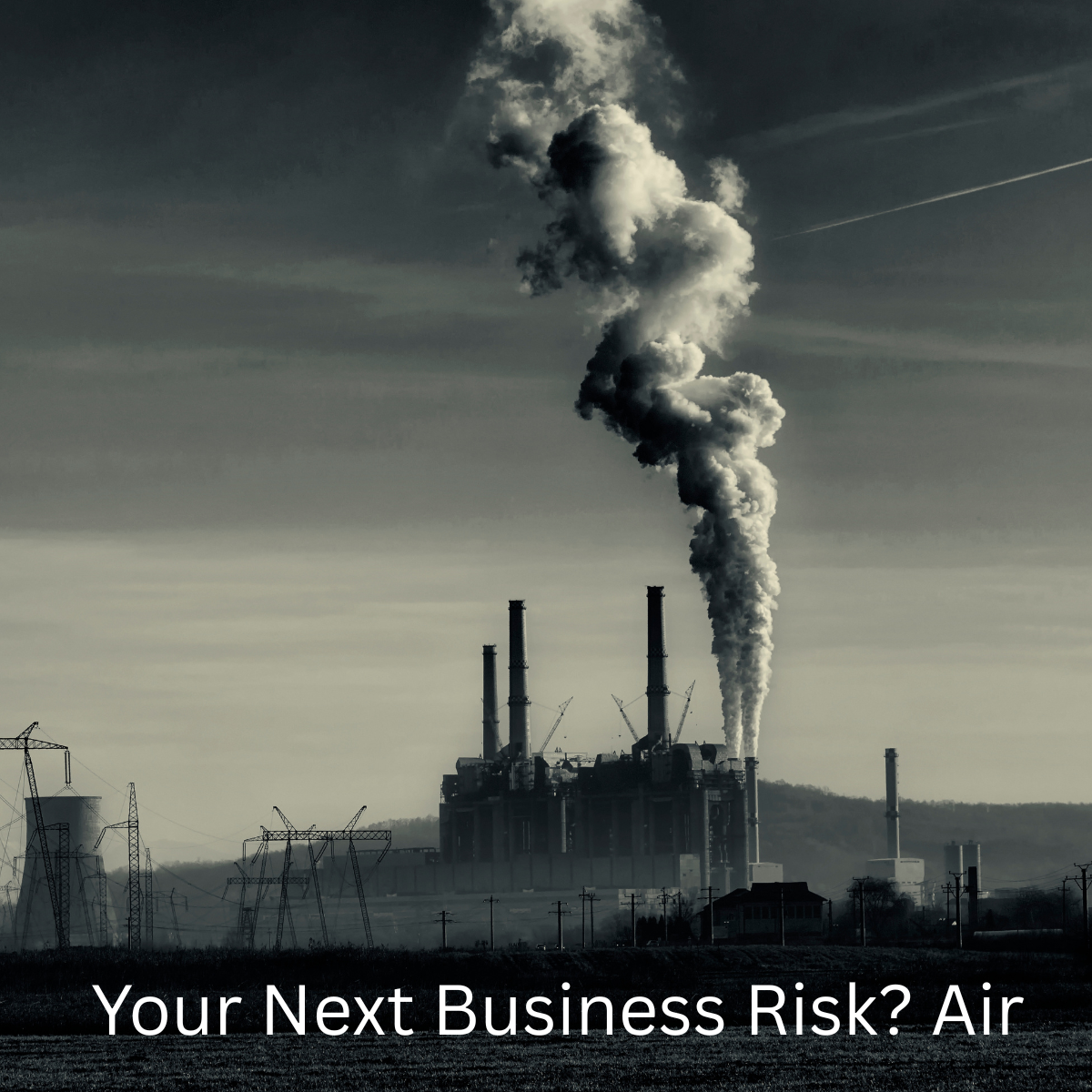
A New Class of Business Risk
For decades, pollution has been treated as a peripheral environmental concern—an externality to be managed through compliance or delegated to governments. But today, air pollution is a material business risk. It strikes at the heart of corporate strategy, threatening operational continuity, workforce productivity, supply chain resilience, investor confidence, and long-term profitability.
Recent findings suggest that air pollution costs the global economy over $8.1 trillion annually, roughly 6.1% of global GDP. It claims over 8 million lives each year, disproportionately impacting emerging economies like India and China—key nodes in global supply chains.
This is no longer a distant environmental issue. Pollution is now an economic drag, a human capital disruptor, and a regulatory flashpoint.
The Multi-Dimensional Impact of Pollution on Business
🔹 1. Economic Burden and Market Fragility
The economic costs are staggering and unequal. In India alone, air pollution contributes to an annual loss of $150 billion, representing 5.4% of its GDP. In China, the number is even higher at $900 billion.
These losses are largely due to decreased labor output, increased healthcare burdens, and lower life expectancy, all of which directly reduce consumer and workforce capacity in growth markets.
🔹 2. Workforce Productivity and Health
Pollution-related illnesses led to the loss of 1.3 billion working days in India in 2019. Businesses experience not just higher absenteeism but also “presenteeism”—employees working while unwell, resulting in 8–10% productivity losses on high pollution days.
Poor air quality also impacts cognitive performance, especially in knowledge industries. Harvard research found that indoor air pollution can reduce cognitive function by up to 50%, affecting problem-solving, focus, and decision-making.
🔹 3. Talent Acquisition and Retention
Cities with poor air quality are becoming undesirable for talent, especially younger, mobile workers. In Delhi, Indian IT companies report up to 28% higher hiring difficulties and a 33% reduction in competitiveness due to air quality. Multinationals in China have reported losing executives or having to offer relocation incentives because of urban pollution levels.
This is more than an HR problem—it’s a competitive disadvantage in a global race for top talent.
🔹 4. Supply Chain Vulnerabilities
Pollution is intricately tied to the broader climate crisis, triggering extreme weather events that damage infrastructure and disrupt supply chains. Case in point: In 2022, heatwaves in China forced manufacturing shutdowns, impacting global production of semiconductors and auto parts.
Further, increased pollution decreases manufacturing efficiency. In China, a 1 µg/m³ decrease in PM2.5 improved labor productivity—an indication of how air quality shapes economic output even at the factory level.
🔹 5. Rising Insurance and Infrastructure Costs
Air pollution drives up health insurance premiums and increases claims related to chronic diseases such as asthma and cardiovascular illness. It also leads to accelerated degradation of buildings, machinery, and public infrastructure, adding further cost burdens to operating in polluted geographies.
According to the OECD, pollution-related health costs will rise from $21 billion in 2015 to $176 billion by 2060. These are internalized costs businesses can no longer ignore.
🔹 6. ESG and Regulatory Pressure
Environmental, Social, and Governance (ESG) frameworks are rapidly evolving. In the EU, CSRD mandates businesses disclose how they affect and are affected by environmental risks. India’s BRSR now requires top companies to include value chain emissions (Scope 3) starting FY2025–26. In the U.S., California has passed mandatory climate disclosure laws.
Non-compliance affects more than legal standing—it can diminish ESG scores, hinder access to green capital, and expose companies to reputational damage.
The Strategic Opportunity: Regenerative Action
But amid risk lies opportunity. Businesses that proactively invest in regenerative environmental strategies—particularly those that restore natural systems—can transform pollution from a liability into a strategic advantage.
🌱 Seedballs: Scalable, Low-Cost, High-Impact
One such solution is seedball-based afforestation—a method that uses clay-encased seeds to promote reforestation with minimal labor and high engagement. Backed by science and adopted by programs in Kerala, Meghalaya, and corporates like Infosys, seedball initiatives:
- Enhance local air quality
- Sequester carbon (reducing Scope 3 emissions)
- Create green cover to mitigate urban heat islands
- Engage employees and communities
- Offer powerful ESG storytelling opportunities
Seedball activities are easy to integrate into employee volunteering programs or CSR campaigns, creating high visibility and shared purpose. They directly support several UN Sustainable Development Goals (SDGs), including SDG 3 (Good Health), SDG 11 (Sustainable Cities), SDG 13 (Climate Action), and SDG 15 (Life on Land).
Conclusion: The Business Case for Regeneration
It’s time for businesses to shift pollution from the sidelines of CSR to the center of strategy. Air pollution is a systemic risk—undermining growth, resilience, and brand equity. But companies that respond with regenerative foresight, transparency, and tangible action will not only weather the storm—they will lead the transition.
Whether it’s through seedball afforestation, ESG-integrated operations, or strategic decarbonization, the message is clear: regenerative leadership is the new competitive edge.
📥 Download the Full Report: Pollution — Business Risk, Opportunity
For a detailed, data-backed look at how pollution impacts businesses globally—and how companies can respond—download the full report here:
Leave a Reply